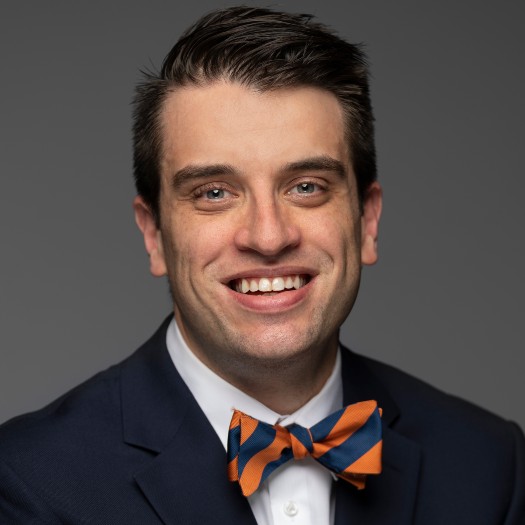
Nathan T. Cohen, MD
- Assistant Professor, Neurology and Pediatrics
- Principal Investigator
- Neurologist
Nathan T. Cohen, MD, is a physician-scientist, an attending epileptologist and child neurologist at Children’s National Hospital and assistant professor of neurology and pediatrics at The George Washington University School of Medicine. Dr. Cohen earned an ScB in neuroscience from Brown University, where he was elected to Sigma Xi. He obtained his MD from the University of Virginia School of Medicine. Dr. Cohen performed all of his postgraduate medical training at Children’s National Hospital including internship and residency in general pediatrics, and fellowships in child neurology and epilepsy. He also spent a year as an attending pediatrician in the Children’s National Emergency Department. He is board-certified in epilepsy and neurology with special qualification in child neurology.
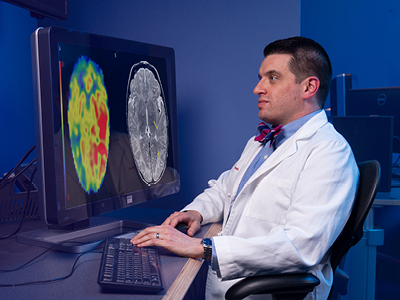
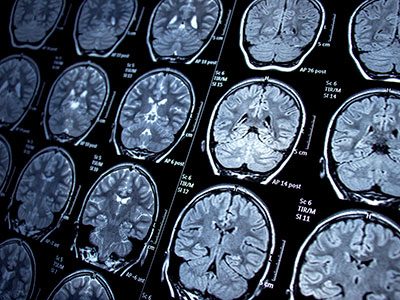
Dr. Cohen founded and directs the internationally-recognized Focal Cortical Dysplasia (FCD) Research Program at Children’s National Hospital, the goal of which is to develop advanced imaging and neurophysiological techniques to define network mechanisms of epilepsy. His pioneering, collaborative research has changed clinical practice and provided insights into the neural networks of disease and comorbidity expression in focal epilepsy. He is the site Principal Investigator for the Multi-centre Epilepsy Lesion Detection (MELD) Project, a large, international consortium dedicated to the development of tools to improve detection of epileptogenic lesions in patients with drug-resistant epilepsy.
He is an expert in pediatric epilepsy, neuroimaging and epilepsy surgery. He has published in many top-tier journals including Annals of Neurology, Neurology, JAMA Neurology, Brain and Epilepsia, among others. His current research is funded by the National Institutes of Health (NIH) National Institute of Neurological Disorders and Stroke (NINDS) K23 Career Development Award. Prior competitive research support includes the American Academy of Neurology Career Development Award, the Pediatric Epilepsy Research Foundation (PERF)/Child Neurology Foundation (CNF) Shields Research Grant and the Children’s National Research Institute Chief Research Officer Award. His work has received numerous awards including the 2020 John M. Pellock Award for the top pediatric research abstract at the international American Epilepsy Society Annual Meeting; the 2023 George Washington University School of Medicine Early Career Clinical Scientist Research Award; and platform presentations at many conferences.
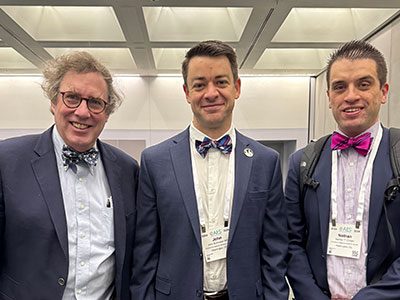
He is actively involved in the American Epilepsy Society where he serves as an invited member of the Research and Training Council, which provides overarching direction for research efforts of the world’s largest epilepsy organization. He has served previously on the Investigators Workshop Committee, Scientific Program Committee, Pediatric Content Committee and Early Career Membership Committee. He is an invited member of the Medical Advisory Board of Hope for Hypothalamic Hamartomas, the largest international, family-run nonprofit organization dedicated to this rare brain lesion. Dr. Cohen serves on the editorial board of Neurology: Clinical Practice.
Dr. Cohen’s clinical focus is on the management of refractory epilepsy. He is particularly interested in the surgical management of epilepsy. His research interests include the development and application of advanced neuroimaging techniques, surgical epileptology, malformations of cortical development (with a focus on Focal Cortical Dysplasia), the pharmacologic treatment of epilepsy and the study and treatment of status epilepticus.