
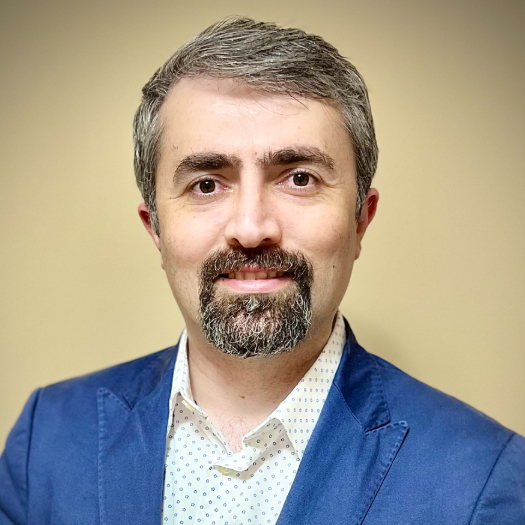
Cemal Karakas, MD, FACNS
- Associate Professor, Neurology and Pediatrics
- Neurologist
- Epileptologist
- Neurophysiologist
Cemal Karakas, MD, is an associate professor of neurology and pediatrics at the George Washington University School of Medicine and a pediatric epileptologist at Children’s National Hospital. His clinical and research work focuses on drug-resistant epilepsy (DRE) and advanced neuromodulation therapies in children.
Dr. Karakas’ expertise spans Lennox-Gastaut syndrome (LGS), stereo-electroencephalography (sEEG), functional brain mapping, epilepsy surgery and neuromodulation — including responsive neurostimulation (RNS), deep brain stimulation (DBS) and vagus nerve stimulation (VNS) implantation and management. His research centers on understanding and improving surgical and neuromodulatory outcomes in pediatric DRE. He has led multicenter work through the Pediatric Epilepsy Research Consortium (PERC), including a recently published study characterizing surgical decision-making in LGS. He has published extensively on predictors of surgical success, longitudinal outcomes of RNS and VNS and strategies to optimize neuromodulatory therapies in children with complex epilepsies.
At Children’s National, Dr. Karakas serves as medical director of the Neuromodulation Clinical Program and the EEG Laboratory, where he leads institutional research initiatives involving sEEG, epilepsy surgery and neuromodulation. He collaborates closely with a multidisciplinary team including pediatric epileptologists, neurosurgeons, neuropsychologists, engineers and data scientists. His academic portfolio includes more than 50 peer-reviewed publications, multiple manuscripts under review or in revision and several funded projects, such as a Child Neurology Foundation Transition of Care grant and multi-site epilepsy surgery outcomes studies.
Through his leadership in program building, collaborative LGS research and innovation in neuromodulatory strategies, Dr. Karakas is committed to advancing precision therapies and improving long-term outcomes for children living with severe, drug-resistant epilepsies.