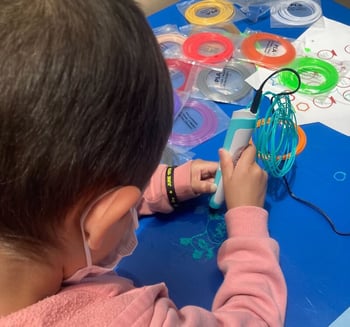
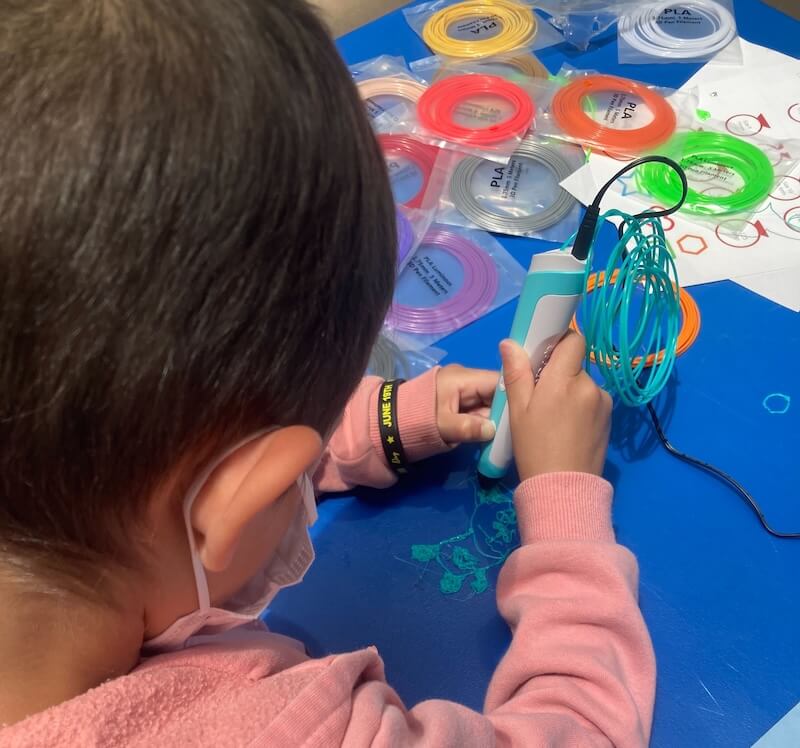
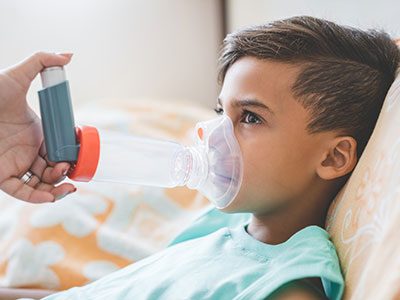
The program is designed to inspire interest in STEM educationChild participates in a science learning activity at Children’s National Hospital in Washington D.C, June 19, 2024.At the Children’s National Research Institute, STEMM education is finding a new classroom—right at the hospital bedside. In a program designed to expand access to informal STEMM (science, technology, engineering, mathematics and medicine) learning, the institute is helping young patients and their families engage with the medical world around them in meaningful and empowering ways.
The initiative is part of a broader national movement to transform everyday environments into learning spaces, particularly for youth who may not have access to traditional educational opportunities. In this case, the hospital becomes a classroom. A classroom where curiosity, health and science intersect.
Through this program, Children's National patients and their families are introduced to medical concepts, diagnoses, technologies and procedures in an age-appropriate and accessible format. Having access to STEMM education and hands-on learning can improve a child’s healthcare journey and inform healthier choices.
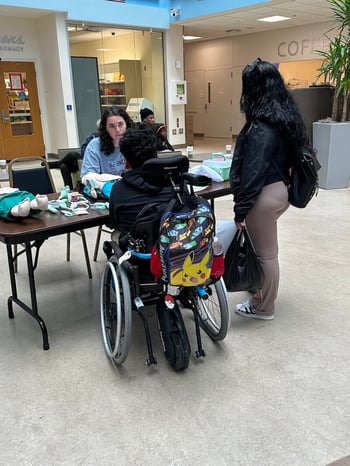
Children participate in a science learning activity at Children’s National Hospital in Washington D.C., March 25, 2025.By connecting these topics to what patients are actively experiencing in their care, the program simplifies complex medical ideas and fosters a sense of understanding of various science concepts. This opportunity has the potential to create positive moments out of what normally feels like an uncertain and negative experience. Commenting on the Mindfulness Jar activity, a caregiver said that their child learned important methods of self-soothing—specifically, “how to turn [their] emotions into art.” This activity, they continued, demonstrated how to “take something that seems bad and make it good and useful – like, frustration and annoyance are now glitter in a jar.”
One clinical laboratory scientist said, “One thing that I found really helpful is just the aspect of normalizing the hospital a little bit. I think it is an experience that a lot of our kids miss out on while they're here—especially during long admissions—of participating in those types of activities that they otherwise might see at school.”
He also shared that it was important for patients to have the opportunity “just to say the word ‘poop’ while at the hospital.” Being free to speak about their own digestive processes, they continued, was “something that's really fun and brought a lot of joy to them.”
Families are also included in the learning experience, reinforcing key lessons and supporting a healthcare journey where the family truly understands their child’s care. By including caregivers, the impact of the program is extended beyond individual hospital visits, making medical knowledge more inclusive and family-centered.
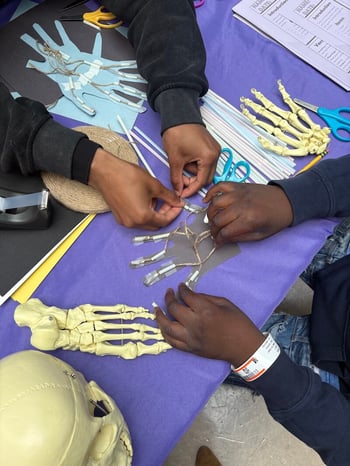
Children participate in a hands-on science learning activity at Children’s National Hospital in Washington D.C., April 29, 2025. The activity replicates real healthcare scenarios. This initiative stands alongside other innovative programs highlighted recently—like Liberty Science Center and Bank of America’s career-readiness effort in cybersecurity and the American Library Association and FINRA Foundation’s financial literacy tools in libraries. Though varied in scope, each shares a core goal: preparing youth with the tools, knowledge and confidence they need to navigate an increasingly complex world. Some of these initiatives provide kids with alternative access to career paths, when deemed unlikely to go to college.
By embedding learning directly into the hospital setting, Children’s National is not only supporting young patients’ intellectual development but also helping to reduce barriers to STEMM education for a population that is often underserved. It’s a model that highlights how learning can happen anywhere—and how critical it is to meet youth where they are.