
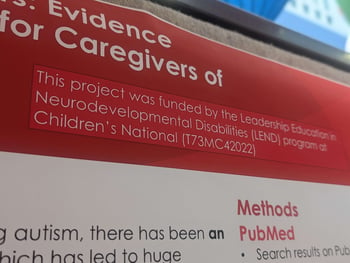
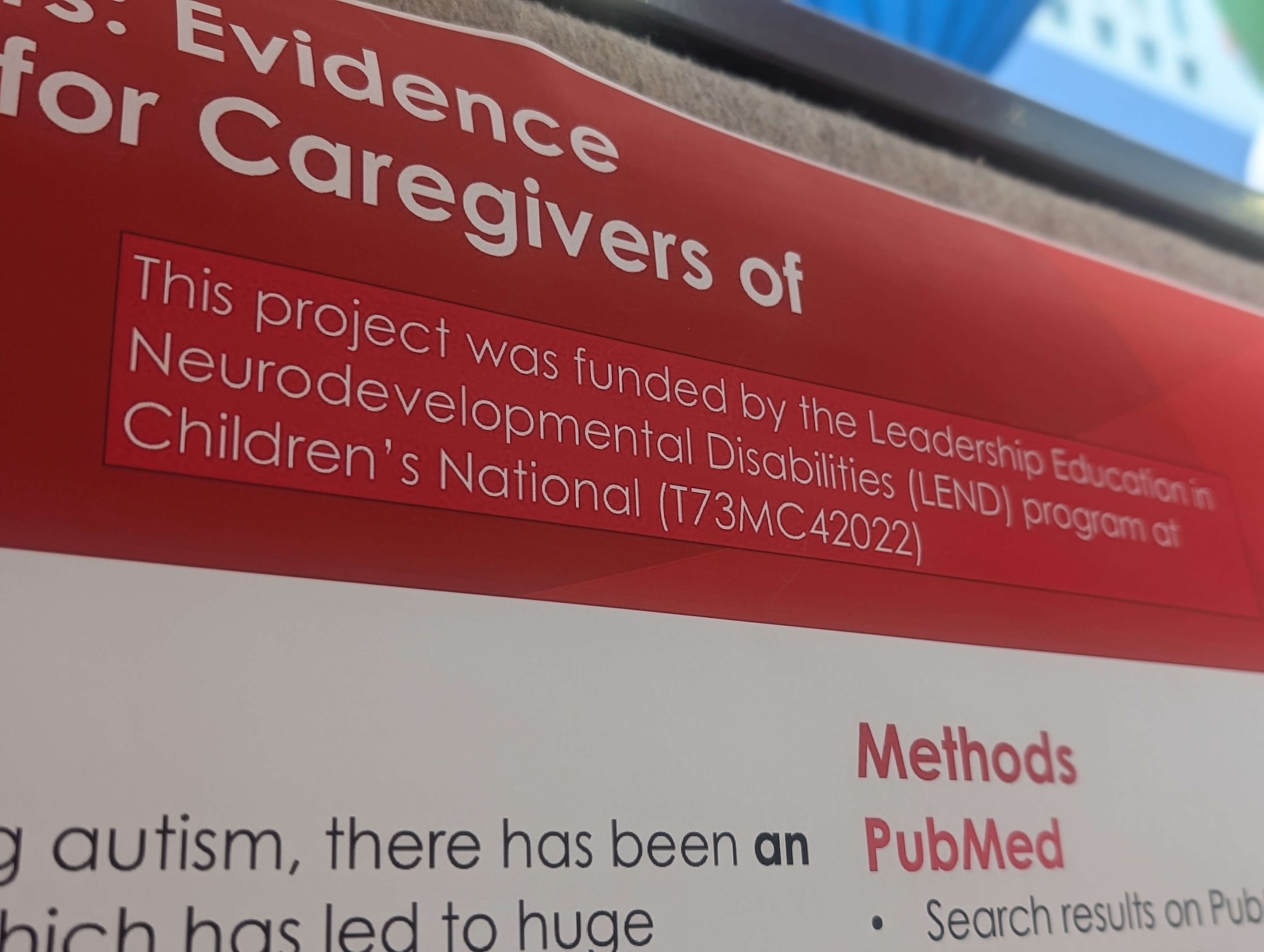
Two LEND trainees took home abstract awards. Novelle Leach was recognized for her work examining whether PCIT and SPACE parenting interventions are meeting the needs of young children with neurodevelopmental disabilities and their families. Benjamin Upbin received the second award for research that surfaced a striking gap in the autism support landscape: while resources for autistic children are widely available, support for their parents and caregivers remain difficult to find and underrepresented in the literature.
Upbin, a self-advocate, described the question that drove his work as both personal and practical. He noticed that nearly all the resources he encountered were child-focused and wondered whether parents searching for support were running into the same wall. His research confirmed that they were. The work made the case that a well-supported caregiver is fundamental to effective caregiving, and that the field has more work to do in centering families, not just children, in its research agenda.
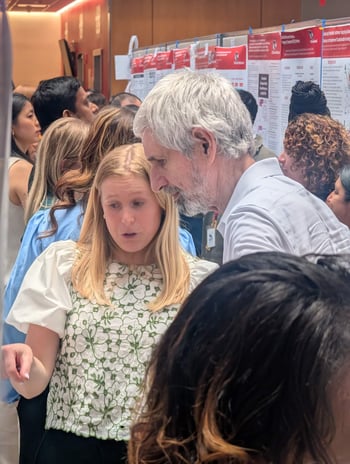
What made the LEND presence at REI Week notable was not only the quality of the research but the experience of presenting it. Nearly all the LEND trainees who presented were doing so at a major conference for the first time, and most were supported on site by their Children's National faculty mentors. Upbin reflected on what the experience taught him: the preparation that feels like worry is often the preparation that carries you through. The confidence he found at the poster board was earned through the work itself.
That spirit reflects what LEND-CN is designed to produce. The program trains interdisciplinary professionals from a wide range of backgrounds to recognize, diagnose, advocate for and develop policy in support of children with developmental disabilities, autism spectrum disorder and related conditions, and their families. Its graduates are expected to lead, and REI Week gave this cohort an early, visible opportunity to do exactly that.
In the words of Benjamin, “LEND allowed me to connect with parent advocates and professionals in family centered care.”
Related News
-
LEND trainees show what interdisciplinary research looks like
June 16, 2026 -
.png?rev=45399f6575bd48bc83382dcfcf450401)
Exploring placental frontiers to protect mothers and babies
February 24, 2026 -
Building connections: Children’s National celebrates summer interns
October 07, 2025